 Sicily Mount Etna Tours
How to Get to Mount Etna
The fastest way to get to Mount Etna from Catania is the SS385 through Nicolosi to Rifugio Sapienza, about 45 minutes to an hour by car. From Taormina you can reach either side of the volcano in around an hour by road, and from Syracuse or Messina the A18 puts you on the same park roads with an extra stretch of motorway. This guide to how to get to Mount Etna covers both road access points, the drive times from each base, the thin public transport options, parking at the trailheads, and how guided tours compare with driving yourself. Entry to the trails is free. What you actually pay for is the cable car, the 4x4 buses and the guides, and the sums change depending on which side of the volcano you choose. If you would rather see the whole market side by side, start with the Mount Etna tour price comparison and work back to the route and base that fit the day you have.
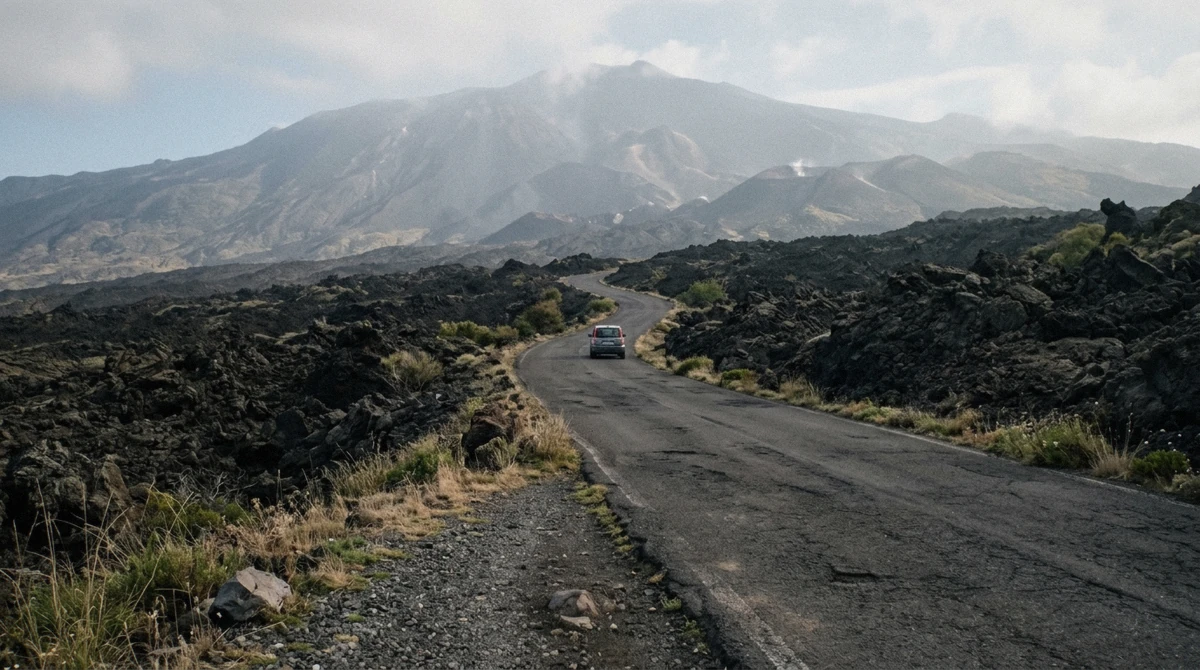
Quick answer Drive from Catania or Taormina, pick Sapienza or Provenzana, or book a tour
You get to Mount Etna by road, and there are only two road access points. Rifugio Sapienza sits on the south side at about 1,920 m and is reached through Nicolosi, most easily from Catania in 45 minutes to an hour. Piano Provenzana sits on the north side at about 1,810 m and is reached through Linguaglossa, about an hour from Taormina. Walking the marked trails is free, while the cable car, the 4x4 buses and the guides cost extra, and above roughly 2,900 m a certified guide is required by regional law. Public transport runs only as a seasonal bus from Catania in the high season, so a rental car or a tour is the dependable way up.
Key takeaways
- From Catania, Rifugio Sapienza is 45 minutes to an hour by car via Nicolosi. From Taormina, Piano Provenzana is about an hour on the north side.
- Etna Summit Excursion to 3,000 Meters by Cable Car and 4x4 bundles the drive, the cable car and a volcanological guide into one booking.
- Taormina to Mount Etna: Every Way Up the Volcano breaks down the routes from the northeast coast base by base.
The Short Answer
There are two roads up Mount Etna and no way around that. The south side ends at Rifugio Sapienza, about 1,920 m above sea level, reached through the town of Nicolosi. The north side ends at Piano Provenzana, about 1,810 m, reached through Linguaglossa.
Both trailheads are free to enter and both have car parks, a guide hut and a small set of services. Everything above those points is on foot, by cable car or by 4x4 bus.
From Catania the drive to Sapienza takes 45 minutes to an hour. From Taormina you are about an hour from Provenzana and about an hour and a quarter from Sapienza. From Syracuse add roughly an hour to the Catania times, from Messina about 50 minutes to the Taormina exit, and from Palermo count on about three hours to the south side via the A19.
Public transport is the weak link. A seasonal bus links Catania with Rifugio Sapienza in the high season only, and nothing dependable serves the north side. That leaves three realistic plans: rent a car, book a tour that includes transport, or accept the seasonal bus and its timetable.
Most independent travellers drive, and most first-timers take a tour, because the guide handles the altitude rules as well as the road.
Two Roads, One Volcano: Sapienza or Provenzana
Choosing between the two access points is the real decision behind any Etna trip. Sapienza on the south side is the busier of the two because it is closer to Catania and because it is the base for the cable car, which runs from 1,920 m to a station at 2,500 m. From the upper station you can join a guided group with the 4x4 bus to about 3,000 m, or walk the marked routes lower down around the Crateri Silvestri.
Provenzana on the north side is quieter and has a different character. The 2002 eruption flow crosses the landscape here, and the walks from the car park at about 1,810 m stay below the guide-only line unless you join a certified guide. There is no cable car on this side, so the summit zone is reached on foot with a guide over a full day.
If your priority is solitude and lava landscapes, the north wins. If your priority is getting high quickly, the south wins.
Regional law 28/1996 draws the line clearly: above roughly 2,900 m you may walk only with a certified alpine or volcanological guide. Below that line anyone can walk the marked routes. Both trailheads sit well under the line, so the choice is really about how high you want to go and how much logistics you want to carry yourself.
For a side-by-side look at what each option costs, compare all Mount Etna tours and match them against the cable car prices on the south side.
Driving from Catania
Catania is the natural base for the south side. Take the SS385 through Nicolosi, then follow the winding park road up to the car parks at Rifugio Sapienza at about 1,920 m. The whole drive takes about 45 minutes to an hour from the city, and the last stretch is the slow part, with hairpins and the park speed limits.
Leave the city by 8:30 am and you will beat both the parking crunch and the build-up of cloud that often arrives later in the day.
The same road serves anyone coming from Syracuse. Join the A18 Catania beltway, then follow the SS385 route as above, which adds roughly an hour to the Catania times. From Palermo the A19 gets you to the south side in about three hours, which makes a day trip possible but long, and an overnight in Catania or Nicolosi a saner plan.
Drivers from Catania should also think about altitude before they think about route. A 28C afternoon in Catania can meet an 8C wind on the slopes at 2,000 m, and the summit zone is colder again and almost always windy. Pack layers in the car even on a clear summer morning. What to Wear on Mount Etna: The Layer System That Works covers the clothing in detail.
Driving from Taormina and Messina
Taormina is the best base for the north side. The drive to Piano Provenzana through Linguaglossa takes about an hour, and the road climbs through vineyards and old lava flows on the way. For the south side from Taormina, count about 1 hour 15 minutes by road to Rifugio Sapienza on the A18, then the Nicolosi road.
Many travellers from the coast split the difference by choosing their side based on the morning forecast rather than loyalty to either trailhead.
From Messina, take the A18 south to the Taormina exit, about 50 minutes, then continue as from Taormina. That puts Messina at roughly two hours from Sapienza and about an hour and three quarters from Provenzana, both workable for an early start. If you would rather not drive at all, Mount Etna Half-Day Small-Group Tour from Taormina runs a six-hour trip from the town with transport included.
The coast roads fill with traffic in the afternoon, especially around Taormina in summer. Plan to be on the mountain early and back off it before the evening crawl. If timing is your main constraint, Taormina to Mount Etna: Every Way Up the Volcano compares every option from that base in one place.
Driving from Syracuse and Palermo
Syracuse sits about an hour south of Catania on the A18 beltway, which puts Rifugio Sapienza at roughly two hours door to door. That is a long but common day trip, and it works best if you commit to an early departure. The beltway can slow near Catania at peak hours, so add a buffer in summer.
Palermo is a different calculation. Count about three hours by road to the south side via the A19, which means a Palermo day trip to Etna spends most of the day driving. If Etna is a priority, it makes more sense to base yourself one or two nights in Catania or on the coast near Taormina and drive up from there.
The volcano is just over 3,300 m at the summit craters and has been a UNESCO World Heritage Site since 2013, so it rewards more than a rushed look.
Whichever city you start from, check the weather the evening before rather than the morning of. Reliable forecast points are Rifugio Sapienza, Crateri Silvestri and Torre del Filosofo on the south side, and Piano Provenzana and Pizzi Deneri on the north. Forecast reliability drops beyond about three days, so late checks are worth more than early ones. When to Visit Mount Etna: Months, Snow and Clear Craters maps the seasonal patterns.
Buses, Trains and the Thin Public Route
Public transport to Etna exists, but only barely. A seasonal bus link between Catania and Rifugio Sapienza runs in the high season only, and there is no dependable service to Piano Provenzana. If you plan around the bus, build your whole day around its timetable and accept that the north side is effectively out of reach without your own wheels or a tour.
The Circumetnea railway circles the lower slopes of the volcano and calls at villages on the flanks, but no station puts you at a trailhead. It is a scenic ride, not an access route for the crater walks. Treat it as a separate excursion rather than a way up.
That leaves car-free travellers with three workable plans. Take the seasonal bus from Catania and keep the day flexible. Base yourself in Taormina or Catania and book a tour with transport included, such as Etna Sunset Tour from Catania or From Catania: Mount Etna Trek, Lava Cave and Tasting Tour.
Or hire a car for a single day, which is usually cheaper than two tour places and gives you the freedom to pick your side based on the sky.
- Rent a car if you want to choose between Sapienza and Provenzana on the day
- Book a tour if you want transport, a guide and the altitude rules handled in one price
- Use the seasonal Catania bus only if your dates fall in the high season and you accept a fixed schedule
- Skip the railway as an access route, because no station reaches a trailhead
Parking at the Trailheads
Parking is simple but not free at the main trailhead. At Rifugio Sapienza the car park is paid and fills by late morning in July and August. Arriving before 9:30 am keeps both the space and the clear-sky window, because cloud often builds over the summit as the day warms up.
At Piano Provenzana the pressure is lighter, though summer weekends still see the rows fill by mid morning.
Both trailheads sit at altitude, about 1,920 m and about 1,810 m respectively, so the air is noticeably thinner and cooler than at the coast even before you start walking. Bring water from the coast towns, because the shops at the trailheads are small and seasonal. The entry to the trails itself is free at both sides, and the only charges are parking, the cable car, the 4x4 buses and the guides.
Tours Versus Self-Drive: What the Money Buys
Self-drive wins on flexibility and loses on altitude. A rental car gets you to either trailhead for the price of fuel and parking, and the marked walks below the guide line cost nothing. But the summit zone is off limits without a certified guide, and on the south side the way around that is the cable car at about $54 (EUR 50) return from 1,920 m to 2,500 m, then a guided combo with the 4x4 bus to about 3,000 m at about $89 (EUR 82).
In summer the upper leg runs as a 4x4 bus, in winter as a snowcat. Add it up and the guided summit day can cost more than a full tour that includes transport from your base.
Tours earn their price by collapsing all of that into one booking. Etna Summit Excursion to 3,000 Meters by Cable Car and 4x4 lists at $63.73 for 4 to 5 hours with a rating of 4.71 from 689 reviews, which undercuts the pay-as-you-go cable car combo before you have even paid for a car. From Taormina, Mount Etna Half-Day Small-Group Tour from Taormina runs six hours at $100.80 with a 4.91 rating from 690 reviews. From Catania, Catania Morning Jeep Tour: Mount Etna and Lava Flow Caves lists at $69.52 for 5.5 hours, and From Catania: Mount Etna Trek, Lava Cave and Tasting Tour lists at $66 for 7 hours with a 4.8 rating from 694 reviews.
The table below puts the listed options side by side so you can match price to the day you have in hand.
If you want a guided full-day summit walk on foot, Mount Etna 3,000 m Summit Hike with Volcanology Guide runs a full-day route with the price listed at checkout. For an evening option that fits around a late arrival in Catania, Etna Sunset Tour from Catania lists at $98.49 for 5 to 6 hours with a 4.95 rating from 297 reviews. Prices and hours come from the listings, and the listings change, so the official listings stay the final word
| Option | Price | Duration | Rating |
|---|---|---|---|
| Etna Summit Excursion to 3,000 Meters by Cable Car and 4x4 | $63.73 | 4-5 hours | 4.71 (689 reviews) |
| Mount Etna Half-Day Small-Group Tour from Taormina | $100.80 | 6 hours | 4.91 (690 reviews) |
| Catania Morning Jeep Tour: Mount Etna and Lava Flow Caves | $69.52 | 5.5 hours | 4.63 (273 reviews) |
| Etna Sunset Tour from Catania | $98.49 | 5-6 hours | 4.95 (297 reviews) |
| From Catania: Mount Etna Trek, Lava Cave and Tasting Tour | $66 | 7 hours | 4.8 (694 reviews) |
| Cable car return, south side (self-drive) | $54 (EUR 50) | not stated | not stated |
| Cable car plus 4x4 bus and guide combo | $89 (EUR 82) | not stated | not stated |
Which Access Fits Your Day
Short on time and based in Catania. Drive the SS385 to Sapienza, park before 9:30 am, and either walk the Crateri Silvestri routes for free or take the cable car if the sky is clear. A half day is enough, and Catania Morning Jeep Tour: Mount Etna and Lava Flow Caves mirrors that plan with transport if you would rather not drive.
Based in Taormina with most of a day. Piano Provenzana is about an hour away and gives you quieter trails through recent lava. If you want the summit zone instead, book ahead with a guide-led option and accept a full day.
Both sides close routes at short notice when activity rises, and the Catania section of INGV publishes updates, so check the evening before regardless of plan.
No car, no problem, but fewer choices. The seasonal Catania bus covers the south side in the high season only, so outside those months a tour is the realistic car-free option. Sumatra-free phrase aside, the honest rule is that the volcano rewards an early start, a layered jacket and a decision made the night before.
Etna is one of the most monitored volcanoes on Earth and Italy's civil protection keeps it at the yellow, lowest alert level, with day-to-day restrictions possible. Is Mount Etna Worth It? An Honest Verdict weighs the effort against the payoff if you are still deciding.
Piano Provenzana, the north-side trailhead: no cable car, quieter trails. Photo: Davide Mauro, CC BY-SA 4.0, via Wikimedia Commons
Car Rental Reality on Sicily's East Coast
Catania airport holds the island's biggest rental fleet, and the drive to either trailhead runs on motorway or wide provincial road the whole way. Book small: the roads are narrow near the parks, the car parks are tight, and nothing on the route needs ground clearance in normal conditions. Manual gearboxes dominate the cheapest categories, so reserve an automatic early if you need one.
Insurance is where rental counters earn their money, and lava dust is where windshields actually chip: the park road above Nicolosi is gravel-edged in places. Photograph the car at pickup, keep the glass cover if the price is sane, and the paperwork stays boring.
Driving style matters more than the vehicle. The SS385 to Nicolosi carries local traffic at honest speeds, the park road above it tightens into hairpins, and coaches use the same lane. Starting early solves most of it: before 9 am the climb belongs to private cars, after 10 it belongs to buses.
Night Arrivals and the Morning Start
Flights land in Catania at all hours, and the volcano rewards the ones that land early. A 7 am arrival puts you at Rifugio Sapienza before the coaches if you skip the city stop; an evening arrival should spend the night in the city or in Nicolosi, not gamble on the mountain road in the dark.
From Taormina the arithmetic is friendlier: the A18 puts the south-side car parks an hour and a quarter away, and the north side closer still, so a base in town supports both a morning volcano run and an afternoon on the beach. Messina and Syracuse work as bases too, with the drive times in the table above as the honest cost.
The last piece is fuel and food. Fill the tank in Nicolosi or Linguaglossa, because the trailheads have pumps in name only, and eat before you climb: the mountain's cafes open with the cable car and run out of patience before they run out of bread.
Guided Transport: What the Tours Take Off Your Plate
Every listing in this comparison is also a transport answer. The Taormina half day removes the drive entirely, pickups included. The Catania mornings replace it with meeting points that cut the city out of the route.
The summit excursion leaves the drive to you, which is why its meeting-point guide matters. Priced against a rental car, fuel and paid parking, the tours' transport component is less of a markup than most travellers expect on these roads.
The public-bus exception proves the rule: the seasonal Catania to Sapienza link runs when demand justifies it, in the height of summer, and stops when it does not. Building a volcano day on it means building the day around its timetable, which is why the catalog treats the car and the tour as the two dependable doors.
How To Get To Mount Etna Questions, Answered
How do you get to Mount Etna?
By road, to Rifugio Sapienza on the south side or Piano Provenzana on the north: about 45 minutes to an hour from Catania, about 1 hour 15 minutes from Taormina. Beyond the car parks you walk, ride the cable car or join a guided route.
Is it safe to visit Etna now?
The marked routes open and close with the volcano's activity, and Italy's civil protection keeps Etna at the lowest, yellow alert level with day-to-day restrictions possible. Check the INGV updates and the cable car's site the evening before.
How much does it cost to go up Mount Etna?
The roads, the parking zone trails and the marked walks below 2,900 m are free beyond the paid parking. The cable car is about EUR 50 return and the combo with the 4x4 and guide about EUR 82, while guided tours from the cities run from about $64 to three figures.
Can I visit Etna without a car?
Yes, but only through tours outside the high season, because the seasonal Catania bus link and the thin timetable make public transport unreliable. Every tour in this comparison includes transport from Catania or Taormina.
Which side is better, south or north?
The south has the cable car, the facilities and the road through Nicolosi; the north has quieter trails, the 2002 eruption zone and no cable car. First visits with limited time go south.