 Sicily Mount Etna Tours
Is Mount Etna Worth It?
Is Mount Etna worth it? For most visitors to eastern Sicily, yes, and by the honest accounting it is one of the few days in Sicily you cannot replicate anywhere else in Europe. This is the highest active volcano on the continent, a UNESCO World Heritage Site, and a landscape of black lava fields, steaming vents and old craters that you can reach within an hour of Catania. Whether it earns a day of your trip depends on the weather, your budget and the kind of day you book, because a cloudy summit run feels very different from a clear morning above the clouds. This page gives a direct verdict, a realistic cost picture and the conditions under which Etna shines or disappoints. To pick the day itself, start with the Mount Etna tours compared side by side on the homepage. Half-day walks from the resorts, jeep trips to lava caves and full summit runs by cable car all sit on the same shelf, and the right choice depends on how high you want to go and how much time you have.
Quick answer The direct verdict, what a day costs and who should skip it
Yes, Mount Etna is worth a day of a Sicily trip for almost anyone who can walk a marked trail, because no other European landscape combines active volcanism, easy access and scale like this. The experience you get depends heavily on the weather and on how high you go, so a guided route above 2,900 metres delivers far more than a rushed car park stop. Expect to spend between roughly $70 and $100 per person on a half-day or day tour, or more for a full summit hike. The drive from Catania takes about 45 minutes to an hour, so the volcano fits into a morning or an afternoon. Book the evening before, check the forecast and keep one backup day in your plan. If your whole trip is beach time and you dislike wind, cold and dust, skip it without guilt.
Key takeaways
- Yes, it is worth it, with the caveat that the day lives or dies on weather and altitude, so pick your route with care and see every Mount Etna tour compared on one page before booking.
- A realistic tour budget is $63.73 for a summit excursion by cable car and 4x4, up to $100.80 for a small-group half-day from Taormina, with full-day summit hikes priced at checkout.
- Above roughly 2,900 metres a certified guide is required by regional law, and the cable car plus guide combo to about 3,000 m costs about $54 to $89 depending on the ticket.
The Short Answer
Etna is worth it if you want a day you will still be talking about years later. It is the highest active volcano in Europe at just over 3,300 m, and you can stand on fresh lava fields less than an hour from Catania. The eruption history, the UNESCO status since 2013 and the sheer strangeness of the terrain make it a genuine one-off rather than a filler day.
The honest caveats come in three parts. Weather can wipe out the view, since a 28C afternoon in Catania can meet an 8C wind at 2,000 m and the summit zone is colder again and almost always windy. Activity levels can close routes at short notice, because summit areas and the cable car shut when activity rises.
And the difference between a good day and a mediocre one is mostly altitude, so the higher you walk with a guide, the more the trip repays you.
For the practical answer on how to spend the day, most readers land on one of two trips. The Etna Summit Excursion to 3,000 Meters by Cable Car and 4x4 gets you high fast, while the From Catania: Mount Etna Trek, Lava Cave and Tasting Tour stays lower and adds a cave and a tasting for $66. Both earn strong review scores in the catalog.
What You Are Actually Going to See
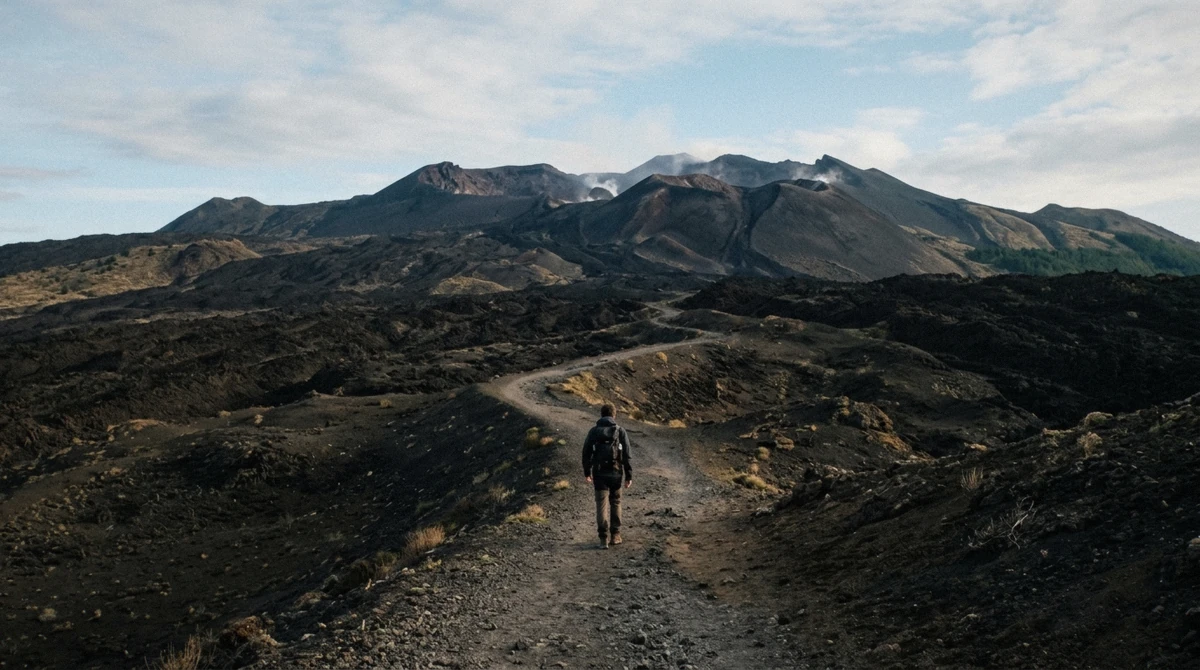
Set expectations before you go, because Etna is not a postcard cone with a tidy path. It is a vast, black, mineral landscape of old and new lava flows, cinder fields and side craters, and much of the day is spent walking on rough ground that looks like a quarry crossed with the moon.
The south side from Rifugio Sapienza
Rifugio Sapienza sits at about 1,920 m and is reached through Nicolosi. From there the cable car lifts you to 2,500 m, and in summer the upper leg continues by 4x4 bus toward 3,000 m, in winter as a snowcat. Marked walks around the Silvestri craters below the cable car are free and open to anyone, which makes this side the simplest self-guided option.
The north side from Piano Provenzana
Piano Provenzana sits at about 1,810 m on the north side, reached through Linguaglossa. It is quieter, with free access to marked routes through lava landscapes and views up toward the summit zone. Tour traffic concentrates on the south, so the north suits drivers who want space.
Lava caves and the eastern flank
Several tours pair a walk with a lava flow cave, a tube left by past eruptions, and helmets and torches are usually provided. The eastern flank also holds the Valle del Bove, a horseshoe-shaped depression formed about 9,200 years ago, and the chestnut tree at Sant'Alfio classed as the oldest and largest in Europe. The Catania Morning Jeep Tour: Mount Etna and Lava Flow Caves is the cleanest way to see a cave without planning anything yourself.
What you will not always see is the summit craters themselves. Above roughly 2,900 m regional law requires a certified alpine or volcanological guide, and routes close when activity rises. Guided walks go to about 3,000 m, which is close enough to feel the heat of the place without ever crossing into the restricted zone.
The Cost Truth: What a Day Really Adds Up To
The entry trails are free, so the cheapest possible Etna day costs only fuel and parking. Most visitors, though, buy some combination of cable car, 4x4 bus and guide, and those are the numbers that matter. The cable car alone runs about $54 (about EUR 50) return, and the combo ticket with the 4x4 bus and a volcanological guide to about 3,000 m is about $89 (about EUR 82).
Against that, a full tour with transport from your base can be the better value once you add the drive, parking and a guide.
Here is what the main catalog options cost side by side, so you can see where your money goes.
| Option | Price | Duration | Rating | Reviews |
|---|---|---|---|---|
| Etna Summit Excursion to 3,000 Meters by Cable Car and 4x4 | $63.73 | 4-5 hours | 4.71 | 689 |
| Mount Etna Half-Day Small-Group Tour from Taormina | $100.80 | 6 hours | 4.91 | 690 |
| Mount Etna 3,000 m Summit Hike with Volcanology Guide | Listed at checkout | Full day | not stated | not stated |
| Catania Morning Jeep Tour: Mount Etna and Lava Flow Caves | $69.52 | 5.5 hours | 4.63 | 273 |
| Etna Sunset Tour from Catania | $98.49 | 5-6 hours | 4.95 | 297 |
| From Catania: Mount Etna Trek, Lava Cave and Tasting Tour | $66 | 7 hours | 4.8 | 694 |
Prices move with the seasons, and the official listings stay the final word
A few honest notes on value. The half-day small-group option from Taormina is the priciest listed here at $100.80, but it carries the strongest logistics for resort-based visitors who do not want to drive the A18. The sunset tour from Catania costs $98.49 and repeatedly earns the highest ratings in the catalog at 4.95, which suggests the evening light genuinely changes the experience.
And if you plan to assemble the day yourself, the cable car and guide pricing makes the Etna Cable Car: How It Works, What It Costs, Is It Worth It breakdown worth reading before you decide.
When Etna Delivers
Etna repays you most when three things line up: clear sky, a morning start and enough altitude to leave the crowds behind. The clearest signal in the catalog is the review pattern. The two strongest-rated listings, the sunset tour at 4.95 and the Taormina half-day at 4.91, both control timing tightly, which is exactly what good volcano days need.
- Clear mornings after a still night, when the summit zone is visible from the car parks and the wind stays low
- Guided days that cross 2,900 m with a certified guide, where the terrain turns genuinely volcanic and the crowds thin out
- Sunset departures, when the low light turns the lava fields red and the slopes empty of day trippers
- Days after fresh activity, when new flows and steaming vents give the landscape a rawness no museum can match
- Shoulder season mornings, when the parking at Rifugio Sapienza still has space and the trails are quiet
Timing matters as much as weather. Parking at Rifugio Sapienza is paid and fills by late morning in the peak summer months, and arriving before 9:30 am protects both your parking space and the clear-sky window. Forecast reliability drops beyond about three days, so check the evening before rather than planning around a long-range forecast.
For month by month detail, see When to Visit Mount Etna: Months, Snow and Clear Craters.
When Etna Disappoints
The same mountain can underwhelm, and it pays to know the failure modes before you spend a day and $70 on them. Cloud is the big one. A deck of cloud at 2,000 m hides everything, and the temperature gap between a 28C afternoon in Catania and an 8C wind on the slopes is a same-day reality, not a rare event.
Visitors who arrive in trainers and a t-shirt often remember the cold more than the craters.
Activity is the second variable. Summit routes and the cable car close at short notice when activity rises, and while Italy's civil protection keeps Etna at the lowest yellow alert level, day-to-day restrictions are possible. A day planned around the cable car can shrink to a walk around the free craters without warning.
The third disappointment is self-inflicted: the rushed day trip that stops at a viewpoint, takes photos at the car park and leaves. Etna at 1,900 m from a car park is a scenic quarry. Etna at 3,000 m with a volcanological guide, or inside a lava cave with a helmet and torch, is a different category of day.
If your schedule only allows the rushed version, weigh honestly whether the drive is worth it to you.
Who Should Skip It
Nobody should feel obliged to tick off Etna. Skip it if your trip is short, beach centered and based in Taormina or the coastal towns and the forecast looks cloudy, because a grey day on black lava is the worst version of the place. Skip it if you have limited mobility and no interest in a cable car, since the best terrain beyond the car parks involves rough walking on loose ground.
Skip it too if you cannot tolerate wind and cold. The summit zone is almost always windy and colder than the coast, and children or companions who hate those conditions will remember the discomfort, not the volcano. Families with very young children usually do better on the lower marked routes or a jeep tour that does the driving.
Anyone hoping for lava rivers on demand should reset expectations, because access depends on activity levels and guide-led routes, and closures are routine. If any of that sounds like your trip, spend the day on the coast and read the verdict again next time. The mountain is not going anywhere.
Etna or the Beach: The Sicily Trade
Most Sicily itineraries force a choice between a volcano day and a coast day, so it is worth being honest about the trade. A beach day is restful, cheap and weather-proof, and after several days of driving and sites many travellers genuinely need it. An Etna day is the opposite: early start, wind, dust, temperature swings and a bit of expense, in exchange for the single most distinctive landscape on the island.
The drive times make the logistics simple to judge. If your base is close to the volcano, the trade costs you half a day and is almost always worth it.
| Starting point | Approximate drive | Notes |
|---|---|---|
| Catania | 45 minutes to 1 hour | SS385 through Nicolosi to Rifugio Sapienza |
| Taormina | about 1 hour 15 minutes to the south side | A18, or about 1 hour to Piano Provenzana on the north side |
| Messina | about 50 minutes to the Taormina exit | then continue as from Taormina |
| Syracuse | roughly 1 hour added to Catania times | via the A18 Catania beltway |
| Palermo | about 3 hours to the south side | via the A19, so it needs an early start |
The verdict on the trade: give Etna one day if you have three or more days in eastern Sicily, and keep the beach for the afternoon after an early return. Tours such as the Etna Sunset Tour from Catania let you keep the whole morning at the coast and still get your volcano hours, which is the best of both for beach loyalists. For routes and bases in detail, see How to Get to Mount Etna: Routes, Roads and Bases and Taormina to Mount Etna: Every Way Up the Volcano.
The Verdict and the Day That Works
The honest verdict: Mount Etna is worth it, with conditions. It is a rare thing, an active volcano that ordinary travellers can approach safely and legally, and no other European destination offers anything comparable. The day rewards preparation.
Pick a clear-weather window, start early, dress in layers for the temperature drop, and go high with a guide if your budget and legs allow it. For clothing specifics, the What to Wear on Mount Etna: The Layer System That Works guide covers the kit.
The day that works for most first timers
From Catania, leave early, drive the 45 minutes to an hour up through Nicolosi, and aim to arrive before 9:30 am. Take the cable car and 4x4 combo with a volcanological guide toward 3,000 m if the weather is clear, or drop to the From Catania: Mount Etna Trek, Lava Cave and Tasting Tour if you want a cave and a tasting instead of altitude. Be back on the coast by late afternoon.
The day that works from Taormina
Skip the self-drive and take the Mount Etna Half-Day Small-Group Tour from Taormina, the best rated logistics-led option in the catalog at 4.91 from 690 reviews. It costs $100.80 and lasts about six hours, leaving the rest of the day free.
The day that works for summit seekers
Book the Mount Etna 3,000 m Summit Hike with Volcanology Guide for a full guided day to the legal ceiling of the routes, or the Etna Summit Excursion to 3,000 Meters by Cable Car and 4x4 at $63.73 if you want the height without the full-day legs. Check the forecast the evening before and keep a spare day in the itinerary in case activity closes the upper routes.
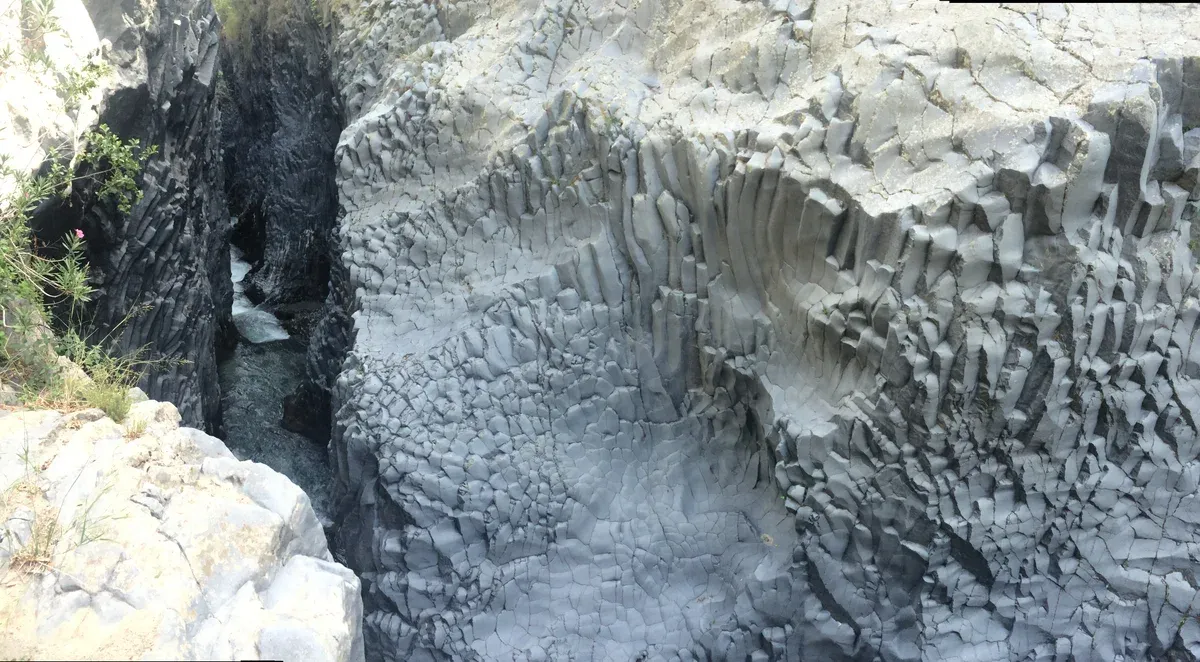
The Alcantara Gorges, the standard pairing on the north drive. Photo: kallerna, CC0, via Wikimedia Commons
The Cost Ladder From Free to Full Summit
Etna prices itself like a staircase. The bottom step is free: both access roads, the parking-zone trails and the marked crater walks below the 2,900-metre line cost nothing beyond the paid parking. The next step rides the cable car, about EUR 50 return to the 2,500 m station.
The third adds the 4x4 bus and a volcanological guide to about 3,000 m for about EUR 82. The top step is the full guided day from a city, with transport, gear and interpretation, priced like the full day it is.
Value hides in the second step of the staircase, not the first. The free Silvestri crater walks give you lava country and a view, but the cable car's 2,500 m station buys the volcano's real face, the one on the posters, without the two-hour climb. The guided tiers buy legality above the line and the reading of the ground, which is worth more than any brochure makes it sound.
Match the step to the trip. A beach week with one free day: drive up and walk the craters. A dedicated volcano day: cable car or the guided half days in this comparison.
The summit-obsessed: the full-day treks, and the full [Mount Etna tours comparison shows what each tier costs side by side.
What the Lower Slopes Give You Instead
Not every Etna day needs the summit zone. The Alcantara Gorges cut a cold basalt canyon an hour from the volcano, the wine slopes around Linguaglossa and Castiglione pour tastings from vines grown on lava, and the eastern villages hold the Castagno dei Cento Cavalli, the oldest chestnut tree in Europe. These sit at the volcano's feet, reachable on the same roads, immune to the crater-zone weather.
The honest pairing uses the mountain's rhythm: craters in the morning while the sky holds, gorge or winery in the afternoon while the cloud arrives. Travellers who plan both halves report the same day twice as good, and the jeep and sunset listings in this comparison are built on exactly that shape.
Etna by Season, One Honest Paragraph Each
Spring is the season of contrast: snow still on the upper slopes, green climbing the lower ones, and the fewest walkers between the two. Cold fronts close the cable car often enough to keep plans flexible, and the reward for flexibility is the volcano at its least crowded.
Summer is the season of certainty and queues: everything runs, the air is at its clearest at dawn, and by late afternoon the haze and the crowds argue for the coast. It is the best season for the highest routes and the worst for solitude.
Autumn is the connoisseur's pick, warm sea, clear mornings, harvest on the wine slopes, and the first storms adding drama to the crater photos. Winter is the specialist's season: skis on the north side, snowcats on the south, short days and a volcano that looks closer to Iceland than to the Mediterranean.
Is Mount Etna Worth It Questions, Answered
Is it worth it to see Mount Etna?
For most visitors, yes: it is the single most dramatic landscape in eastern Sicily, and a clear morning on the crater zone outranks any beach day. The honest caveat is that weather and volcanic activity decide everything, so the plan must bend.
How much time do you need for Mount Etna?
Half a day for the crater zone, a full day for the summit. Budget the drive of an hour or more each way from the coast, and keep the afternoon flexible.
Could Mount Etna destroy Sicily?
No. Mount Etna could not destroy Sicily: it is a frequently erupting, closely monitored stratovolcano whose activity shapes the eastern coast rather than threatening it, and Italy's civil protection keeps it at the lowest, yellow alert level. The monitoring is why a visit feels calm even in an active year.
Can I visit Etna on my own, and if so, how?
Yes: drive to Rifugio Sapienza or Piano Provenzana and walk the marked routes below 2,900 m for free. The summit zone above that line requires a certified guide by regional law.
What is better, Etna or Taormina?
They are not rivals: Taormina is the base and the afternoon, Etna is the morning. The strongest Sicily day pairs the two.
Is it safe to visit Etna now?
Day trips run whenever the marked routes are open, and routes close defensively whenever activity rises. The yellow alert level and day-to-day restrictions are part of normal life on a living volcano.